Pages

Subscribe:

Ads 468x60px

Wednesday, February 20, 2013

An Update on Carly

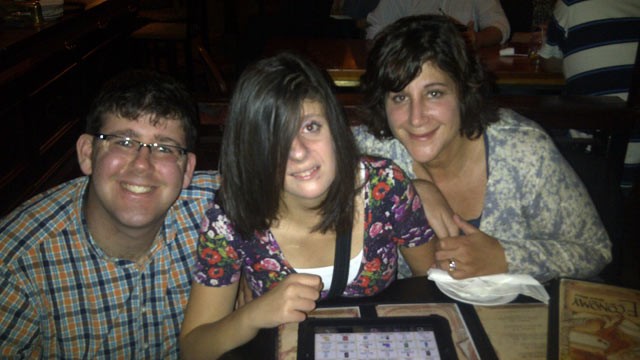
Earlier in the week I posted about Carly Fleischmann, someone who I consider to be a pioneer in the Autism-Technology movement. While searching for updates on Carly, I found an article from this past August that detailed a recent struggle Carly had when attempting to travel by plane. Carly was traveling to her home from Los Angeles. As is typical during air travel, Carly was asked to turn off her electronic device (in this case an iPad) during takeoff. The difference here is, Carly uses her iPad as her primary means of communication. By being asked to turn off the iPad, she was essentially asked to turn off her voice. Carly couldn't ask questions of the flight attendants, voice her concerns, or express any discomfort or health needs during that time. For Carly, it was extremely uncomfortable and made her very anxious.

I understand that there is a long-standing rule that says one must turn off electronic devices during take-off and landing. I have always questioned this and wondered how my iPod could really cause enough interference to take down a plane. Still, I have never had an issue taking some time to pause my music and focus on take-off/landing. I don't need the music, but Carly clearly needs the iPad. Without claiming to know anything about the operation of airplanes, I will say that I doubt that making an exception to Carly's circumstance would cause the airline any real harm.

I wonder how the flight attendants would have felt if they were told that they were forbidden to speak during a good portion of the plane ride because it might interfere with operations. It seems like a silly comparison, but this iPad acts as Carly's connection to the outside world. I haven't exactly formed a complete opinion on it yet, but I wanted to present this as some food for though.

You can read the full story here

Sunday, February 17, 2013

Carly's Story

Today's post is, perhaps, where I should have started this blog. The first time I ever heard about using technology with individuals with autism was when I heard about Carly Fleischmann. In 2009, Carly was profiled on ABC's 20/20. For years, Carly's parents struggled to find a mode of communication that worked for her. Finally, they discovered that Carly could type. She used a laptop to communicate her needs and wants and showed her parents and teachers that she was not only smart, but funny and insightful. Though Carly did not use an iPad for communication at the time of this profile, I have read that she has since started using one because it is more portable and easier for her to control.

If you have a moment, take some time to meet Carly through her 20/20 profile or follow her on Twitter


Wednesday, February 13, 2013

Sharia's Story

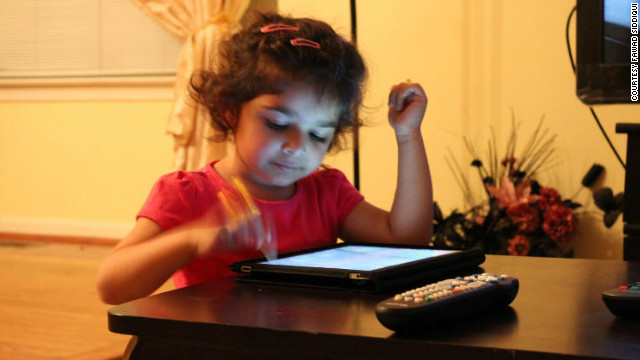
Sharia was diagnosed with autism at the age of 2. Her parents believed that she was simply a late talker, but soon found out that she had some real communication challenges ahead of her. This article tells the story of Sharia's introduction to the iPad and discusses its use as an augmentative communication device.


CNN - iPad gives voice to kids with autism

Monday, February 11, 2013

Autism and the iPad

Since the introduction of the iPad, teachers and caregivers of individuals with autism have attempted to harness its capabilities to make a difference in the lives of those they care for. It is easy to see why. The iPad is a portable, accessible, and semi-affordable piece of technology that can be found in many homes and classrooms.When you bring one out at the grocery store, no one thinks twice about it. But what makes the iPad so valuable is the wealth of apps that are available in its app store. In one device users can play games, practice communication, complete school work, rehearse both academic and functional skills.

This video, a clip from an episode of CBS' 60 Minutes, is an introduction to the functionality of the iPad for students with autism. It explores some of the benefits of the device, as well as some of the drawbacks.